A clinical trial designed specifically for people newly diagnosed with Butterfly Glioblastoma (GBM)

This clinical trial is evaluating an investigational treatment that combines an oral medication with non-invasive, low-intensity ultrasound delivered to both sides of the brain, in addition to standard glioblastoma treatment.

Timing matters. If you have been newly diagnosed with Butterfly GBM and have not yet started radiation and temozolomide, contact us now to see if you may be eligible.

ABOUT BUTTERFLY GBM

What is Butterfly GBM?

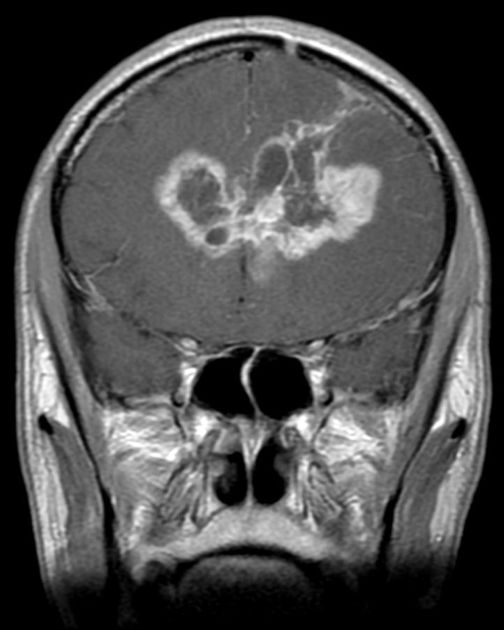
Butterfly GBM is a pattern of glioblastoma in which the tumor crosses the brain’s midline and extends into both cerebral hemispheres, most commonly through a structure called the corpus callosum.

Because the tumor involves both sides of the brain, it can be difficult to treat with surgery alone. Many clinical trials for newly diagnosed GBM exclude patients with this Butterfly pattern, leaving fewer research options.

This study was designed specifically for people with newly diagnosed Butterfly GBM.

Case courtesy of Frank Gaillard, Radiopaedia.org, rID: 2589

Patient and Doctor

ABOUT THE TRIAL

What this clinical trial is evaluating

This Phase 1 clinical trial is studying an investigational treatment for adults with newly diagnosed Butterfly GBM. The treatment combines an oral medication with low-intensity ultrasound delivered through a specialized treatment system.

The study is designed to evaluate safety and tolerability and also to look for signs of anti-tumor activity, including tumor response and overall survival.

The investigational treatment is added to standard glioblastoma care. Participants still receive standard radiation and temozolomide.

How it works

A two-step process under investigation

  • Oral medication

    Patients take a medication that causes certain compounds to build up more in brain cancer cells than in healthy brain cells.

  • Bilateral ultrasound activation

    After the medication is absorbed, low-intensity ultrasound is delivered from outside the head. Researchers are studying whether activating the accumulated compound may affect tumor cells while limiting exposure to surrounding healthy tissue. In this study, one brain hemisphere is treated and then the other during the same visit, for approximately 40 minutes per side.

Participation & Eligibility

What participation may involve

If you’re eligible, participation may include:

  • One or two outpatient investigational treatment visits before standard radiation and temozolomide begin*
  • Continuing standard glioblastoma treatment (radiation and temozolomide)
  • Four additional outpatient investigational treatment visits, once per month.
  • Treatment of both brain hemispheres during each investigational treatment visit.
  • MRI scans, routine study assessments, and follow-up with the clinical trial team.

Participation is voluntary. Final eligibility and the exact treatment schedule are determined by the clinical trial team.

Who may be eligible

You may be eligible if:

  • You are 18 to 80 years old.
  • You have been newly diagnosed with glioblastoma confirmed by biopsy or surgery.
  • Your MRI shows a Butterfly pattern — the tumor crosses the brain’s midline and involves both cerebral hemispheres.
  • You have not yet started standard radiation and temozolomide.
  • You are able to travel to a participating clinical trial site.

Final eligibility is determined by the clinical trial doctors after review of your medical history, pathology, imaging, laboratory results, and other study requirements.

Recently diagnosed? Please contact us as soon as possible. Under the current study design, the first investigational treatment must occur before standard radiation and temozolomide begin. If your treatment is already scheduled but has not started, you may still have time to be evaluated.

Start the Qualification Check

Questions?

If you have questions about the Butterfly GBM clinical trial, a team member can speak with you after the initial screening.

If you are unsure whether the tumor has a Butterfly pattern, you may still complete the qualification check. The clinical team can help determine whether the study may be appropriate after reviewing the available information.